
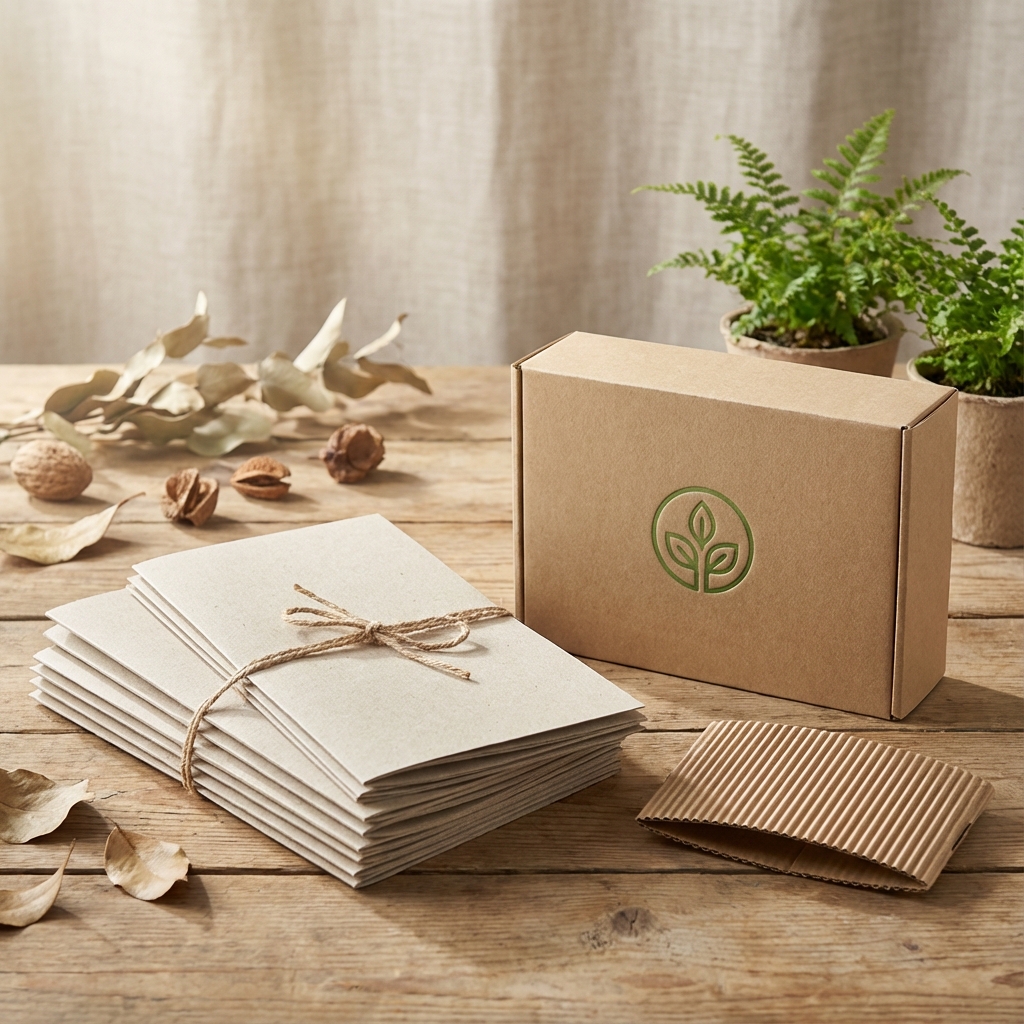
"Print is dying" – sound familiar? We've been hearing this slogan for years, yet... spending on premium print is rising. Business cards are making a comeback. Flyers are selling. Why? Because in 2026, print stops being information and becomes an experience. The client doesn't want another PDF on the screen. They want something they can touch, smell, keep. Something that tells a story without words. Welcome to the new era of printing – the era of smart printing, where every millimeter of paper is a well-thought-out marketing strategy.
Why does physical print win in a world of screens?
Think for a moment: how many ads have you seen online today? 50? 100? And how many do you remember? Studies show that the average internet user forgets a digital ad within 3 seconds. Meanwhile, we hold printed marketing materials in our hands for an average of 12-15 minutes. That's a chasm.
Neurobiology is clear: haptic (touch) memory is more durable than visual memory. When a client picks up a well-designed flyer with textured paper, their brain activates more areas than when scrolling through Instagram bytes. The result? Your brand stays in their mind longer.
Trend #1: Neocrafting – Return to craftsmanship in the AI era
The paradox of perfection
We live in times when AI generates perfectly symmetrical graphics in 2 seconds. Canva produces templates like on a conveyor belt. Everything looks *good*... and *the same*. The client opens their email inbox: 10 identically looking newsletters with the same font, the same layout, the same stock photos.
And that's why in 2026, fascination with imperfection returns. We want to see the trace of a human hand. We want to feel the roughness. Neocrafting is not nostalgia – it's a strategy to stand out in a sea of smoothness.
Papers with character
Forget about white, smooth coated paper. In 2026, a business card should be like... tree bark. But in an elegant edition.
- Cotton Paper: Soft yet sturdy. Resembles fabric. Ideal for premium brands in fashion, wedding photography, or interior architecture.
- Felt Finish: Slightly fibrous to the touch. When a client runs their finger over the business card, they feel the difference. It's a subconscious signal: "This company doesn't skimp on detail".
- Linen Texture: Subtle stripes like on natural fiber fabric. Eco-luxury in its purest form.
Letterpress: A 500-year-old technology that is the pinnacle of luxury today
Letterpress is a printing process where metal type **physically presses into the paper**. The result? Each letter is slightly indented, creates a shadow, is three-dimensional. This is not printing – it's sculpture.
The trendiest variant in 2026? Blind Deboss – embossing without ink. Imagine a black business card on matte stock, where your logo is embossed in black. No gold, no silver. Just light and shadow. It's the height of sophistication. It says: "Our brand is strong enough not to shout".
Case Study: We worked with a law firm that wanted to shed the "cold corporation" image. We designed business cards on ecru cotton paper with blind deboss. The result? Partners told us that clients keep the business cards on their desks – as decoration. This is not a business card. It's a sculpture.
Trend #2: Eco-Consciousness 2.0 – When recycling is not enough
5 years ago, it was enough to write "recycled paper" and you were immediately "eco". In 2026? That's the minimum. Clients ask the question: "What exactly is this recycling made of?".
Upcycled papers – From waste to luxury products
Here's the real revolution: papers made from... food.
- Crush Coffee: Paper with a blend of coffee roasting waste. It has a natural, slightly creamy shade and a delicate coffee scent (yes, really!). Perfect for cafes, restaurants, culinary brands.
- Crush Kiwi: From kiwi peel fibers. Visible small inclusions, greenish hues. Looks *organic* – because it is organic.
- Crush Corn, Almond, Olives: Each of these papers has a unique color and texture. It's not a flaw – it's **authenticity**.
Storytelling through raw material
Imagine a restaurant handing out menus on Crush Coffee paper. At the bottom, a small note: "This menu was printed on coffee waste paper. Like us – we believe in zero waste". This is not advertising. It's a manifesto. And it sells better than any slogan.
Gen Z and Millennial clients (who already make up 70% of purchasing power) don't buy products. They buy values. Upcycled paper says more than a thousand words in the "About Us" section.
Trend #3: Phygital – The bridge between atoms and bits
Print in 2026 doesn't compete with digital. It collaborates with it. Welcome to the world of "Phygital" (Physical + Digital).
NFC: A business card that is a gateway to the digital world
Imagine: you're at a trade show. You exchange business cards with 30 people. In the evening – chaos. Who was who? Which contact was the most important?
Now imagine that each business card has a built-in NFC microchip. The client brings their phone close (like with contactless payment) and BAM:
- Contact is automatically saved on the phone
- A 30-second "About the company" video opens
- They receive a newsletter with a 10% discount
- Link to your portfolio / case studies
This is not science fiction. It's the premium standard in 2026.
QR codes – But not as you think
Old QR codes are black, pixelated monsters in the corner of a flyer. New QR codes are an integral part of the design. Designers incorporate them into graphics – colorize, round, add the company logo in the center.
But the real magic begins when the QR leads not to a website but to Augmented Reality (AR). Examples:
- Furniture catalog: Scan the code → a chair model appears in 3D in your living room (through the phone camera). You can view it from every angle.
- Restaurant menu: Scan a dish → see it animated on the plate, as if it were in front of you.
- Car dealership flyer: Scan → the car "parks" on your desk in mini-3D version.
Expert Tip:
Phygital works only when it's intuitive. Don't write "Scan this code XYZ123 with DEF app and register on...". Write: "Bring your phone here". The fewer steps, the higher the conversion. In A/B tests, the difference is often 300%.
Trend #4: Color of the Year – Cyber Lime and Digital Lavender
Colors in printing are no accident. Pantone announces the "Color of the Year" annually and influences the entire fashion, design, and printing industry. In 2026, two poles dominate:
Cyber Lime – Neon that doesn't hurt
Cyber Lime is neon lime, but *digital*. Not screaming like reflective yellow. It's more... glowing, phosphorescent green with a hint of yellow. Associated with high-tech, gaming, innovation.
How to use it? As a single accent on a dark background. A black brochure with one line of Cyber Lime on the cover – it hits harder than a rainbow of colors. Less is more.
Digital Lavender – Calm in chaos
Digital Lavender is a delicate, cool purple – associated with meditation, wellness, digital wellbeing. Unlike the aggressive Cyber Lime, Lavender *calms*.
Perfect combination? Black background + Cyber Lime accents (dynamics) + large planes of Digital Lavender (balance). It's the palette of the year for IT, aesthetic medicine, wellness brands.
Trend #5: Hyper-personalization – Every client gets *their* brochure
Imagine printing 1000 catalogs. And each one is different. This is not a mistake – it's **Variable Data Printing (VDP)**.
How does it work?
You have a customer database with their preferences, purchase history, favorite colors. A digital printing machine (not offset!) can change the content for each copy:
- **Client's name** woven into the cover graphics
- **Product offer** they viewed on the site
- **Photo of their city** as a background (if you know the location)
- **Dominant color** matched to their preferences
Numbers don't lie
Direct Marketing Association studies show that personalized direct mail has a conversion rate 500% higher than standard "mass" mailings. Why? Because the client feels noticed.
Real Case: A jewelry store sent 200 personalized brochures to VIP clients. Each cover had the client's name engraved (digital printing + gold foil + letterpress). Inside – a jewelry offer tailored to their history (if they bought rings, the new ring collection was shown). ROI? 34 transactions from 200 sent brochures. That's a 17% conversion. Standard mailing gives 0.5-1%.
What does this mean for your company?
You don't have to implement all 5 trends at once. On the contrary – **it's better to choose one and do it perfectly**.
The question is: Which trend fits your brand?
- Are you a luxury brand? → Neocrafting (letterpress, textures)
- Do you focus on ecology? → Eco-Consciousness 2.0 (upcycled papers)
- Do you want to be hi-tech? → Phygital (NFC, AR)
- Do you need sales effects? → Hyper-personalization (VDP)
Key advice: Consistency > Quantity. Better to have 100 perfectly matched materials than 10,000 "somehow printed" flyers.
Expert Advice:
Don't chase everything at once. We've seen hundreds of projects trying to combine: kiwi paper + neon Cyber Lime + letterpress + NFC + VDP. The result? Chaos. Choose ONE leading trend. If you're going for Eco 2.0, let the paper be the star - skip the neons. If you choose Letterpress, let the design be minimalist. Elegance loves space.
Summary: Print is not dying. It evolves.
The year 2026 is not the end of print. It's its renaissance – but in a new form. Not mass, mindless runs. Only precise, sensory, storytelling sales tools.
Remember: in a world where everyone gets 200 emails a day, a physical flyer with Crush Coffee paper and blind deboss is not a cost. It's an investment in the client's attention.
And that's exactly why print will not only survive – it will grow. But only the smart one.
Ready to outpace the competition in 2026?
Are your advertising materials still stuck in 2020? Safe, boring, like everyone else's? Time for an upgrade. Contact us – we'll help you choose papers, technologies, and effects that will make your brand stay in the client's memory for years.
Get a quote